




kamisoriharnisch
Takami・たかみ・New Kamisori ・Watetsu Edition
Takami・たかみ・New Kamisori ・Watetsu Edition
In stock
Couldn't load pickup availability
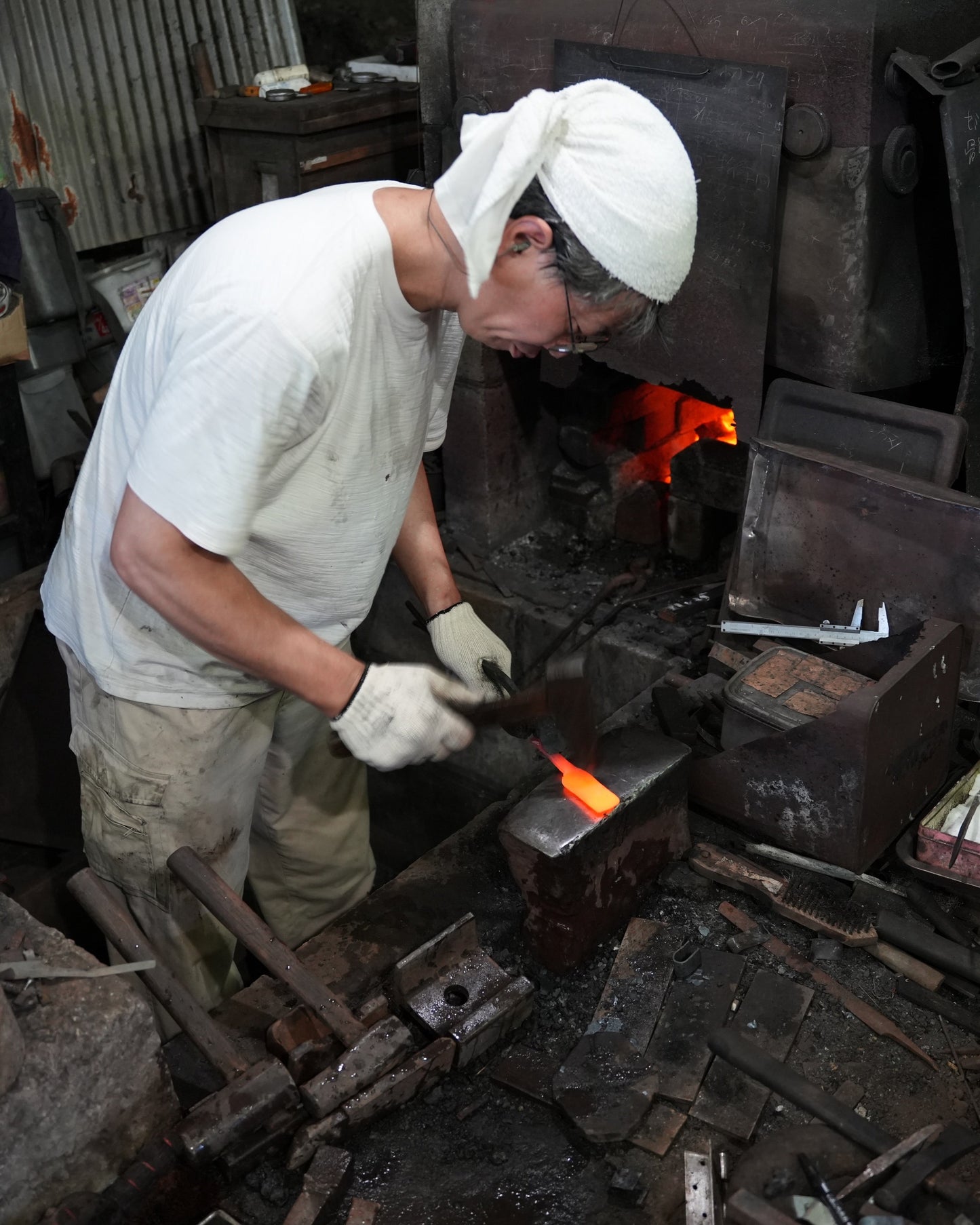
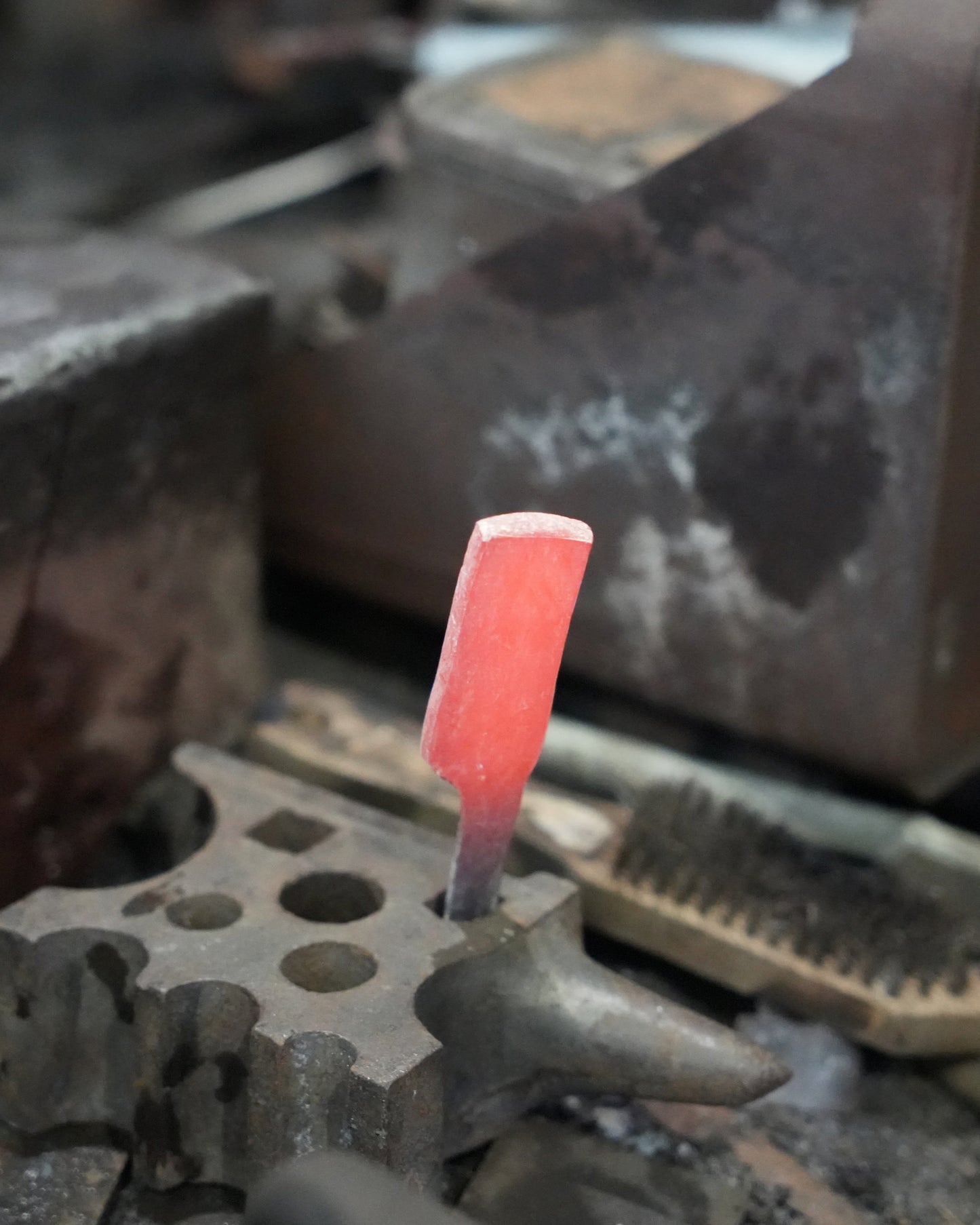
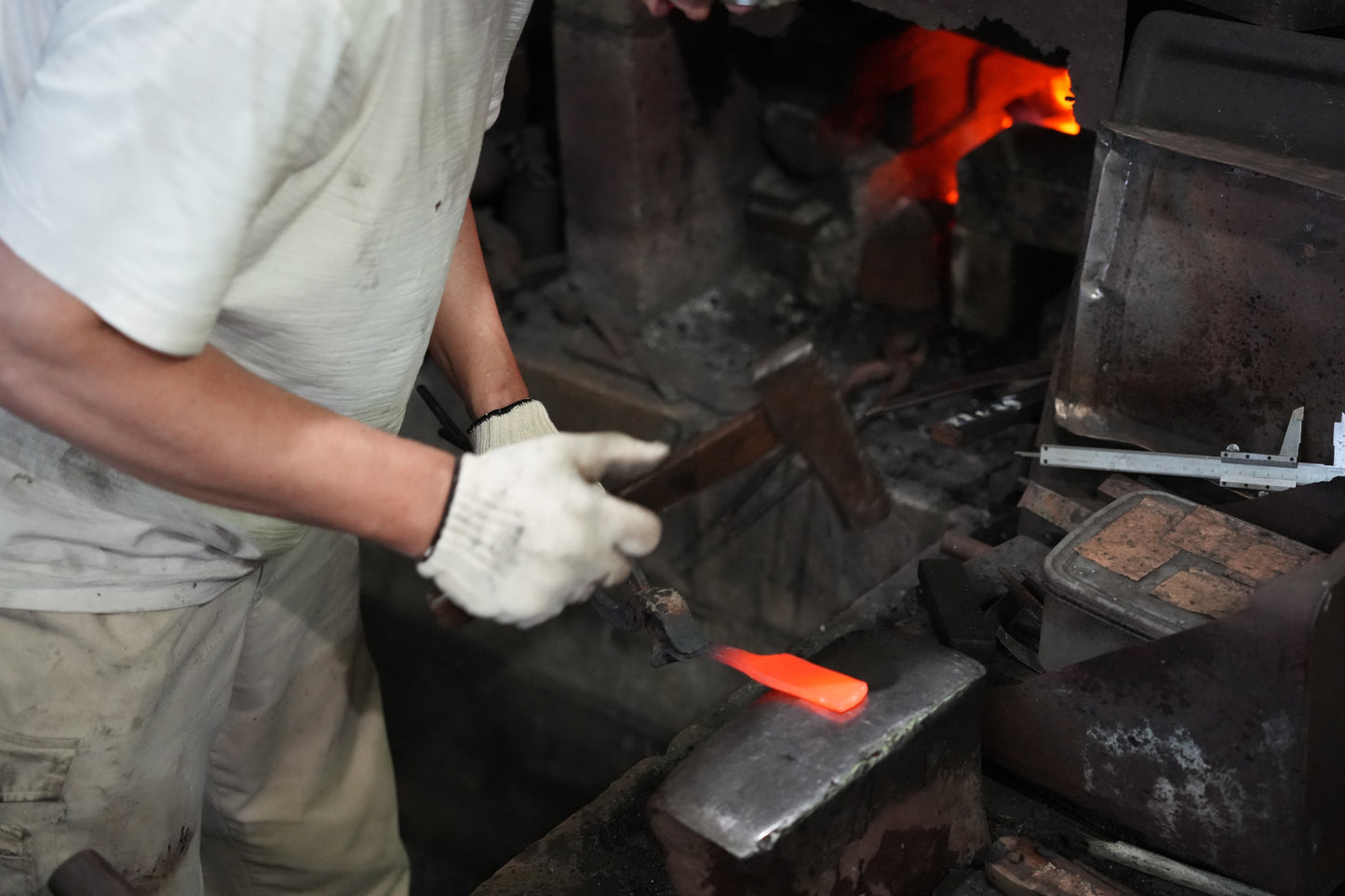
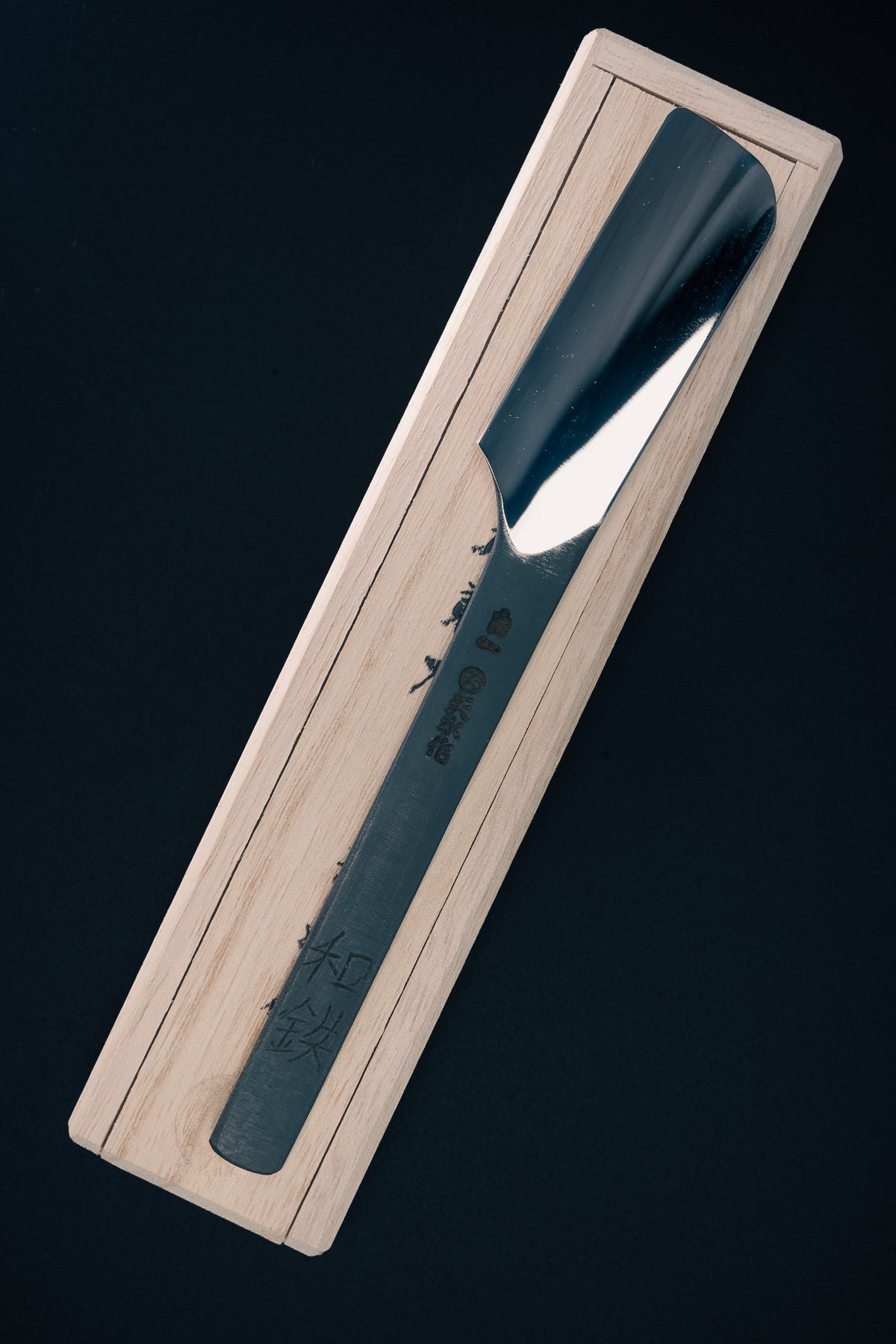
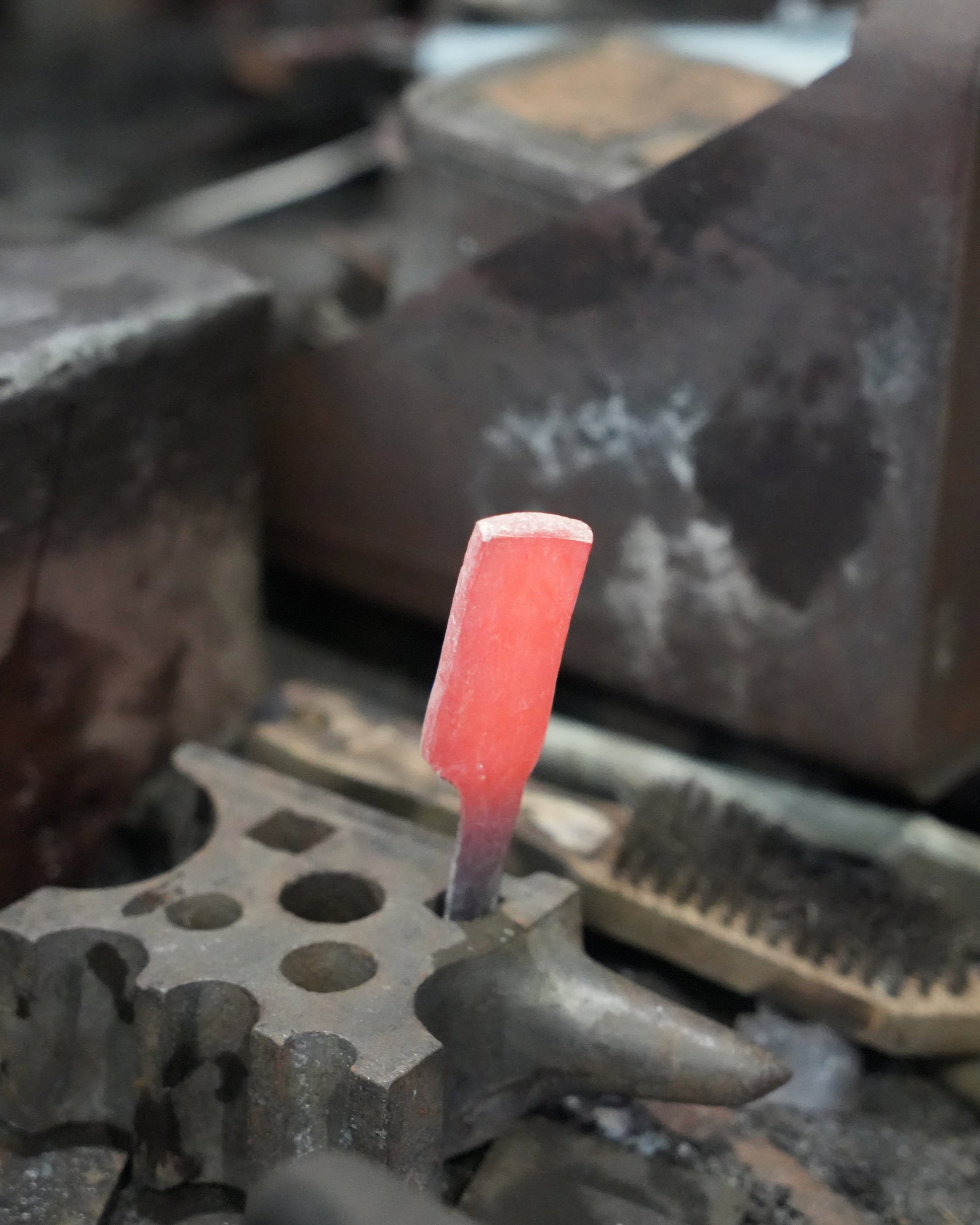
A traditionally forged Japanese straight razor by Mr. Amano (Tensui) in Kōchi, Japan. Shirogami #1 cutting edge, asymmetrical grind. Handle and carrying layer are made from watetsu・old Japanese iron, reforged from old tools or anchor chains for this wonderful straight razor — all watetsu predates modern factory made iron.
Watetsu is full of little impurities which give a very distinct layering on the Omote side. Just beautiful to look at and very traditional — please look at the close up photos to see it in detail.
Mr. Amano cut the mark 和鉄・watetsu by hand with a chisel into the lower part of the handle of every single razor of this edition. Ten pieces were made, each one marked individually.
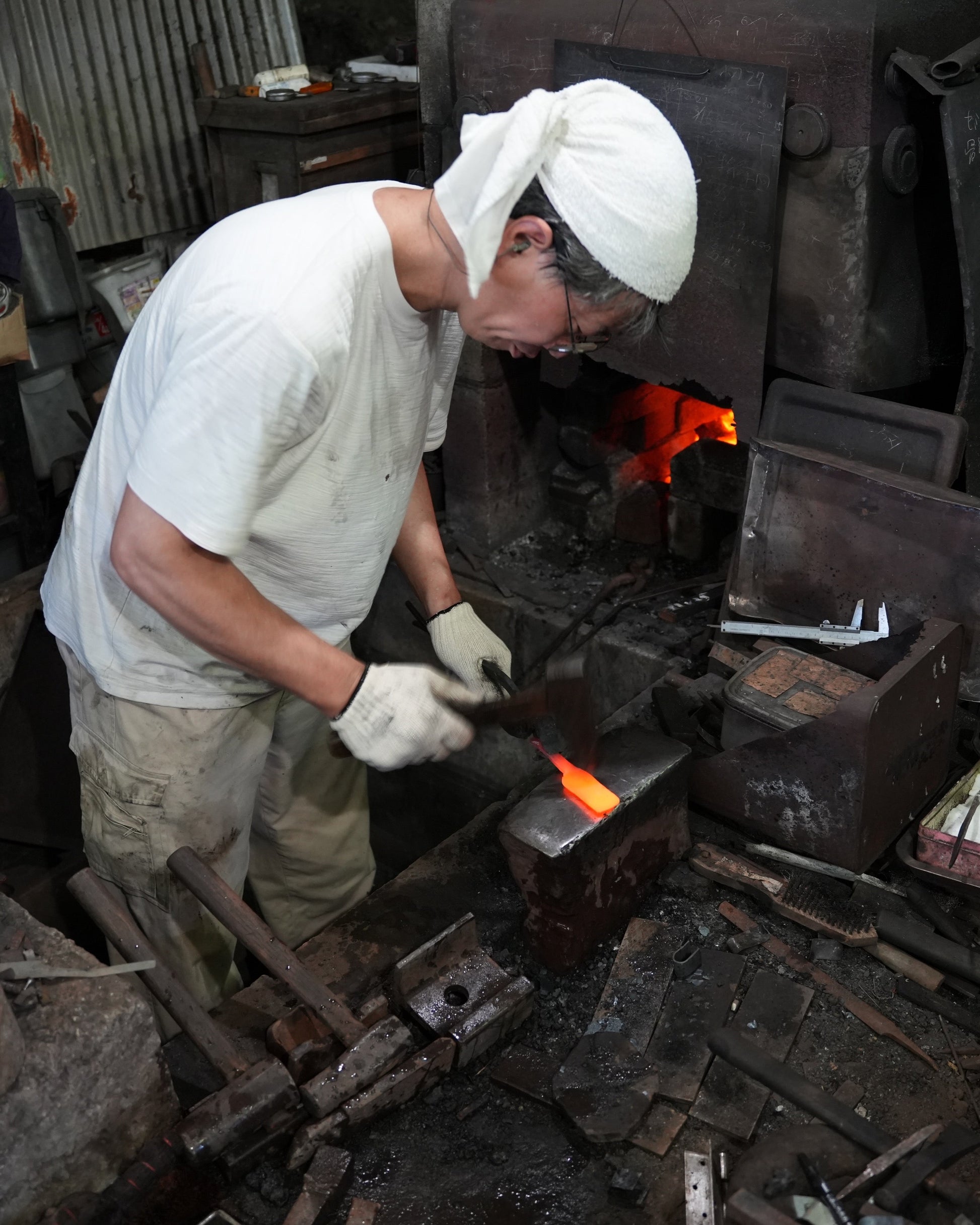
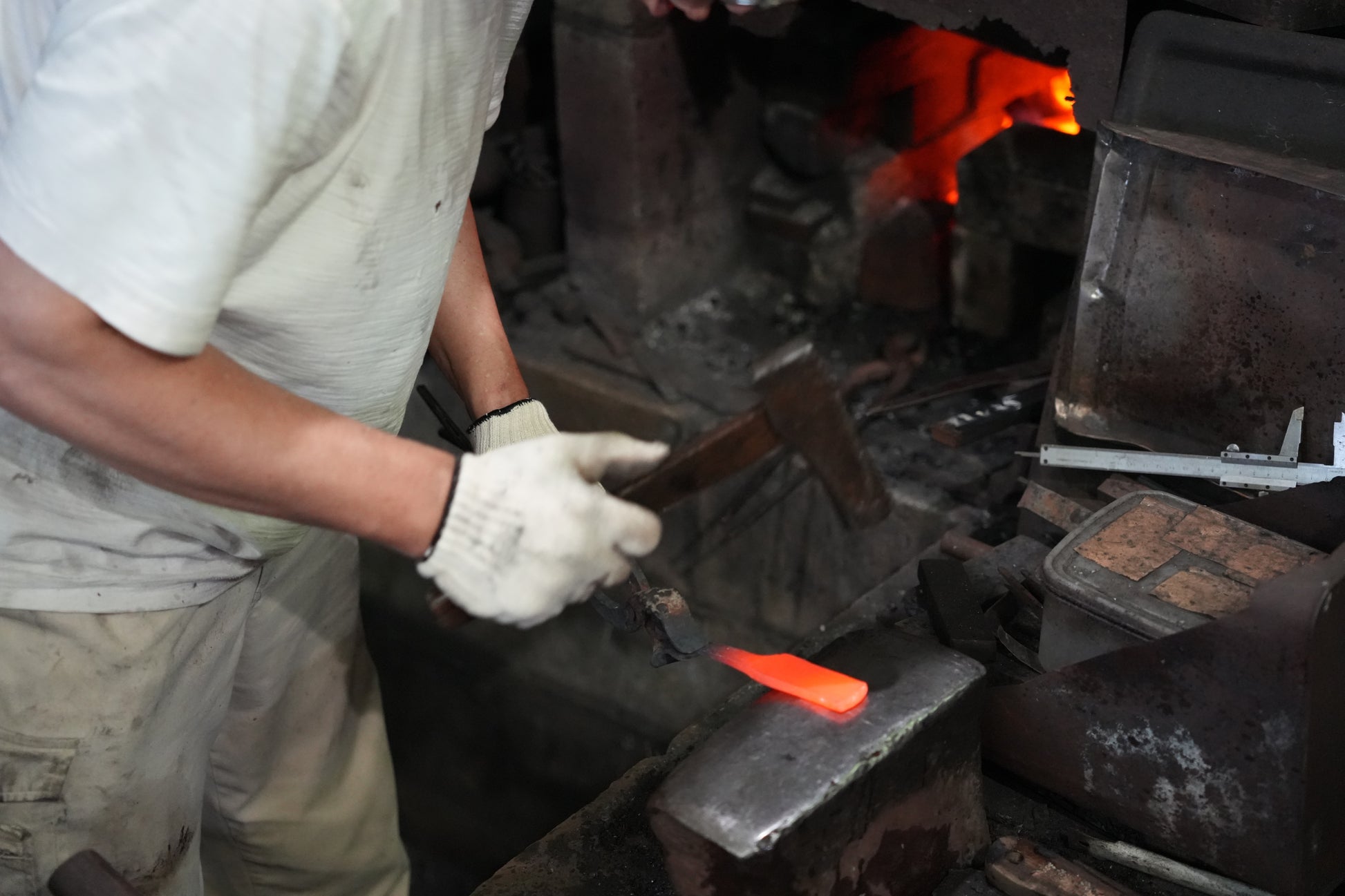
Mr. Amano shapes and sharpens each Kamisori in his workshop in Kōchi — the geometry set, the edge formed. The final refinement on flat Japanese waterstones was traditionally the barber's work, matched to his hand and skin. We complete this step in our atelier: honed on natural Japanese whetstones and stropped to full shaving readiness before the razor ships.
New, unused, delivered shave-ready with a fitting Kamisori-Guard.
Full Description
Full Description
This Kamisori is traditionally laminated from two different materials, following established Japanese razor-making practice. The cutting edge is forged from high-carbon White Paper Steel No. 1 (Shirogami #1); the supporting body from 和鉄・watetsu, traditional Japanese iron. This combination allows the blade to reach exceptional hardness and edge refinement at the cutting edge, while the softer iron body provides stability, resilience, and ease of maintenance.
Watetsu is the older material. It predates modern industrial steelmaking, is low in carbon and full of fine impurities, and shows a distinct layering on the Omote side.
Mr. Amano primarily uses Hitachi Yasugi White Paper Steel No. 1, sourced from material produced around the 1990s. The standard Takami razors carry an extra-low-carbon soft steel body; this edition was forged with watetsu as a special order, in a run of ten pieces.
Both steels are non-stainless. Carbon steels are chosen for edge refinement and hardness — qualities stainless alloys cannot match — and require routine drying and a thin film of oil after use to prevent oxidation. White Paper Steel No. 1 is valued for its ability to take an exceptionally smooth shaving edge and hold it over extended use before resharpening is required.
On the Final Edge
Mr. Amano shapes and sharpens each Kamisori in his workshop in Kōchi. The geometry is set, the edge is formed. What remains is the final refinement on flat Japanese waterstones — a stage traditionally left to the barber, who matched the edge to his own hand, angle, and strop. Without this step, the blade will cut, but not in the way a Kamisori is meant to cut.
We complete this final refinement in our atelier. The edge is set on a progression of natural Japanese whetstones, refined on Mikawa Nagura, and finished on linen and leather. The razor arrives not merely sharp, but shave-ready in the precise sense — smooth, stable, ready to meet skin without further preparation.
Presentation
The razor is supplied in a traditional sliding-lid box, signed by Mr. Amano.
Blade Engravings
白一 (Shiro Ichi) — White Paper Steel No. 1
丸に天 (Maru ni Ten) — the Takami mark: Ten (天, meaning heaven / sky) within a circle
天水作 (Tensui Saku) — Made by Tensui
和鉄 (Watetsu) — Japanese iron. Mr. Amano cut this mark by hand with a chisel into the lower part of the handle of every razor of this edition. It marks the material of the body and is the one engraving that separates these ten pieces from the standard line.
Tensui is the smith's art name; the razors are sold under the Takami name. Mr. Amano works in Kōchi Prefecture, on the Pacific coast of Shikoku — historically known as Tosa Province.
About the Maker
Mr. Amano began his career as a blacksmith around 1994, training in Kōchi Prefecture under Keiichiro Tsutsui and Toshimune Tsutsui, with primary guidance from Mr. Keiichiro Tsutsui. He began producing Japanese razors around 2010. Notably, he did not learn Kamisori-making through a formal master–apprentice lineage; his razors have evolved through direct response to customer feedback, refined over time by practical use and demand. Today, Mr. Amano forges each blade alone in his private workshop overlooking a small coastal city on the Pacific Ocean. Removed from modern distractions, he works with complete focus, producing razors defined by material honesty, restraint, and quiet strength.
Materials
Materials
Steel/鋼: White paper steel #1・白紙鋼1号
Jigane/地金: 和鉄・watetsu, traditional Japanese iron
Box: Paulownia tomentosa wood
Measurements
Measurements
Length: 16.9 cm
Head width: 2.9 cm
Length of cutting edge: 5.5
Weight 51.9 g
this is a handforged Kamisori, slight variations of these numbers are normal
Engraving
Engraving
白一 (Shiro Ichi) — White Paper Steel No. 1
丸に天 (Maru ni Ten) — the Takami mark: Ten (天, meaning heaven / sky) within a circle
天水作 (Tensui Saku) — Made by Tensui
和鉄 (Watetsu) — Japanese iron. Chiselled by hand into the lower part of the handle, added individually to every razor of this edition to mark the material of the body.
Tensui is the smith's art name; the razors are sold under the Takami name. Mr. Amano works in Kōchi Prefecture, on the Pacific coast of Shikoku — historically known as Tosa Province.
Care Guide
Care Guide
・wipe dry with a towel after each use
・you can also apply some camellia oil to protect the kamisori from rust
・After a few months it might be necessary to hone your razor. Start with the finest possible stone >10.000 grit
Share