
One of a kind
Mikawa Nagura Set・Botan / Mejiro / Koma・Traditional Japanese Nagura for Razor Honing #111
Mikawa Nagura Set・Botan / Mejiro / Koma・Traditional Japanese Nagura for Razor Honing #111
Low stock
Couldn't load pickup availability
Taxes included. Shipping calculated at checkout.
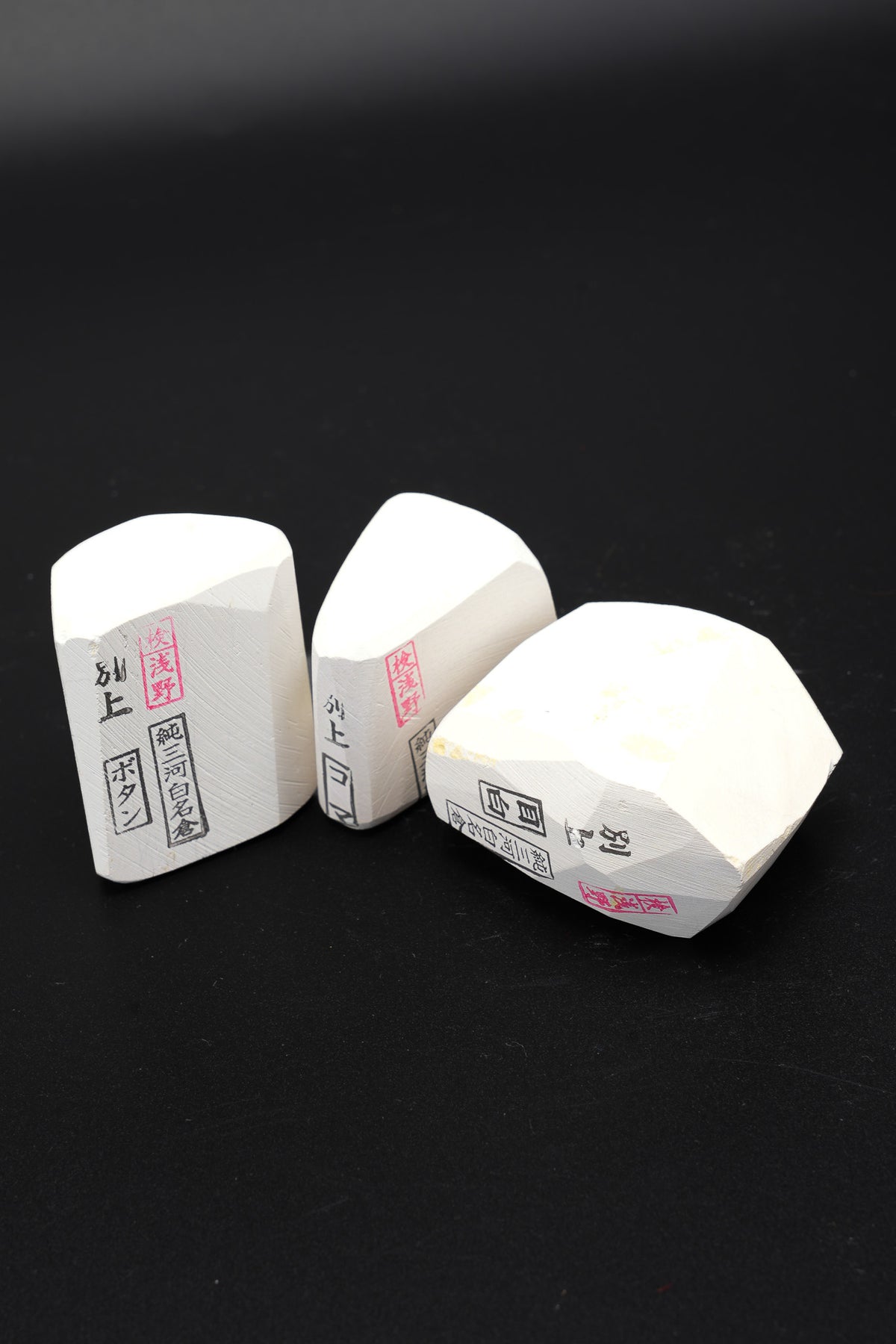
Three Mikawa nagura in one set: Botan, Mejiro and Koma, from coarse to fine. Each stone carries the red 検浅野 Asano inspection stamp and 純三河白名倉・jun Mikawa shiro nagura・pure Mikawa white nagura.
Grades stamped: all three 別上・betsu-jō.
You receive exactly the set shown.
Full Description
Full Description
This Mikawa nagura set includes Botan, Mejiro and Koma, a complete progression from coarse to fine slurry for traditional Japanese razor honing.
Each stone has its own role:
• Botan is the coarsest of the three. Its slurry cuts fast and removes the scratch pattern of the previous stone.
• Mejiro follows. Its slurry is finer and smoother; it sharpens the edge further and evens the surface.
• Koma is the final nagura stage before water-only or tomo finishing. Its fine, dense slurry brings the edge to full refinement.
About the stamps
• 検浅野・ken Asano・inspected by Asano: the red inspection stamp that authenticates Mikawa nagura.
• 純三河白名倉・jun Mikawa shiro nagura・pure Mikawa white nagura.
• 別上・betsu-jō and 特級・tokkyū describe the look of the stone: betsu-jō is white, tokkyū shows stripes or colour. They are not fineness grades; the stratum (Botan, Mejiro, Koma) sets the fineness.
Recommended use
• Raise slurry in order: Botan, then Mejiro, then Koma
• Use light pressure and dilute during each stage
• Finish on water only or with a fine tomo nagura
As with all natural stones, each nagura varies in hardness and feel. There is no synthetic grit rating.
Materials
Materials
Natural Mikawa Nagura - Botan, Mejiro, Koma
Measurements
Measurements
Weight: 203 g (set)
Hardness: ● ○ ○ ○ ○ (1/5) soft
Care Guide
Care Guide
Japanese nagura stones are precision tools used to condition sharpening stones and refine edges. Proper care ensures consistent slurry performance and long service life.
1. Keep the Working Face True
Only the working face of the nagura—the surface used to raise slurry—needs to be kept flat. Over time, this surface may become uneven or glazed, which can affect slurry consistency. If needed, lightly lap the working face on a fine diamond plate or flattening stone, removing as little material as possible.
2. Use with Water Only
Nagura stones are designed for use with clean water. Lightly wet both the nagura and the base stone before use. Do not use oil, soaps, or chemical additives.
3. Controlled Slurry Generation
Use light, even pressure when raising slurry. Slurry density can be adjusted through pressure and dilution. Avoid excessive force, which can reduce control and consistency.
4. Clean After Use
Rinse the nagura thoroughly after each use to remove metal particles and residue. A soft brush may be used if needed. Do not use detergents or abrasive cleaners.
5. Dry Slowly and Naturally
Allow the nagura to air dry completely in a shaded, well-ventilated area. Avoid direct sunlight, heat sources, or rapid temperature changes.
6. Store Separately
Store nagura stones in a dry, stable environment and away from heavier stones to prevent impact damage. Ensure the stone is fully dry before long-term storage.
7. Inspect Before Use
Before each use, rinse the nagura and ensure it is free from grit or debris. Any contamination may scratch the base stone or blade.
By following these guidelines, your nagura stone will provide predictable slurry behavior and remain a reliable part of traditional Japanese sharpening.
Share