Nagamasa 永正
- Blacksmith
- Nagai Shōzō・永井正三 (1988)
- Period
- Documented 1988
- Place
- Ōshima-chō, Ono, Hyōgo
- State of evidence
- Smith documented 1988; link to our piece not documented
Nagamasa 永正 is a brand name.
In 1988 a survey of the traditional crafts of Hyōgo recorded the last Japanese-razor smith of Ōshima in Ono: Nagai Shōzō 永井正三, born 1914, known as 「日本剃刀の正さん」 ・ Nihon kamisori no Masa-san ・ Masa of the Japanese razor, under the name 永正 ・ Nagamasa. He was then the only razor maker left at Ōshima, where razor making had come with the Kyoto razor smith Tōbei in the Enkyō era (1744–48).
What the survey says about his work:
His steel was mild steel with Yasuki Blue No. 1; the work had 42 steps, and powered grinding had replaced part of the handwork.
His Japanese razors, 本床向剃刀 ・ hon-tokomuki kamisori ・ razors for the barbershop, came in two kinds, a ladies' face razor and the ordinary razor. Orders for them had almost stopped eight or nine years before.
He still made razors for shaving monks' heads, for cutting cloth and rubber, for peeling, razors as charms against evil, and, as the only maker in Japan, the ear-shaving razor.
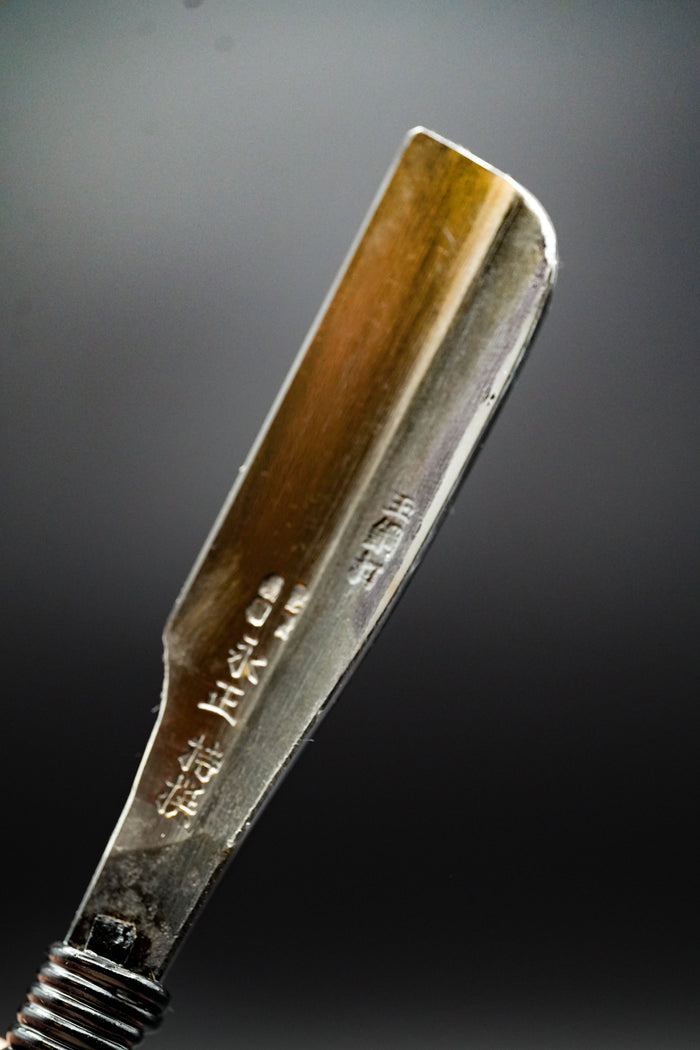
Our piece is stamped 玉鋼打 (made from tamahagane). Whether it is his work is not documented.
Marks and words found on Nagamasa blades:
玉鋼打 ・ tamahagane-uchi ・ forged from tamahagane
永正 ・ Nagamasa ・ the brand
特撰 ・ tokusen ・ specially selected
The full source entries, with transcription and plates, will appear in our book on the history of the kamisori.

Known marks
Reading
Sources
Documented pieces
Documented – sold

Texts and photographs © Kamisori Harnisch. Quotation with source.