

kamisoriharnisch
Uchigumori Renge Namazu・Pierre de polissage naturelle・Awasedo・Kyoto, Japon #102
Uchigumori Renge Namazu・Pierre de polissage naturelle・Awasedo・Kyoto, Japon #102
Stock bas
Impossible de charger la disponibilité du service de retrait
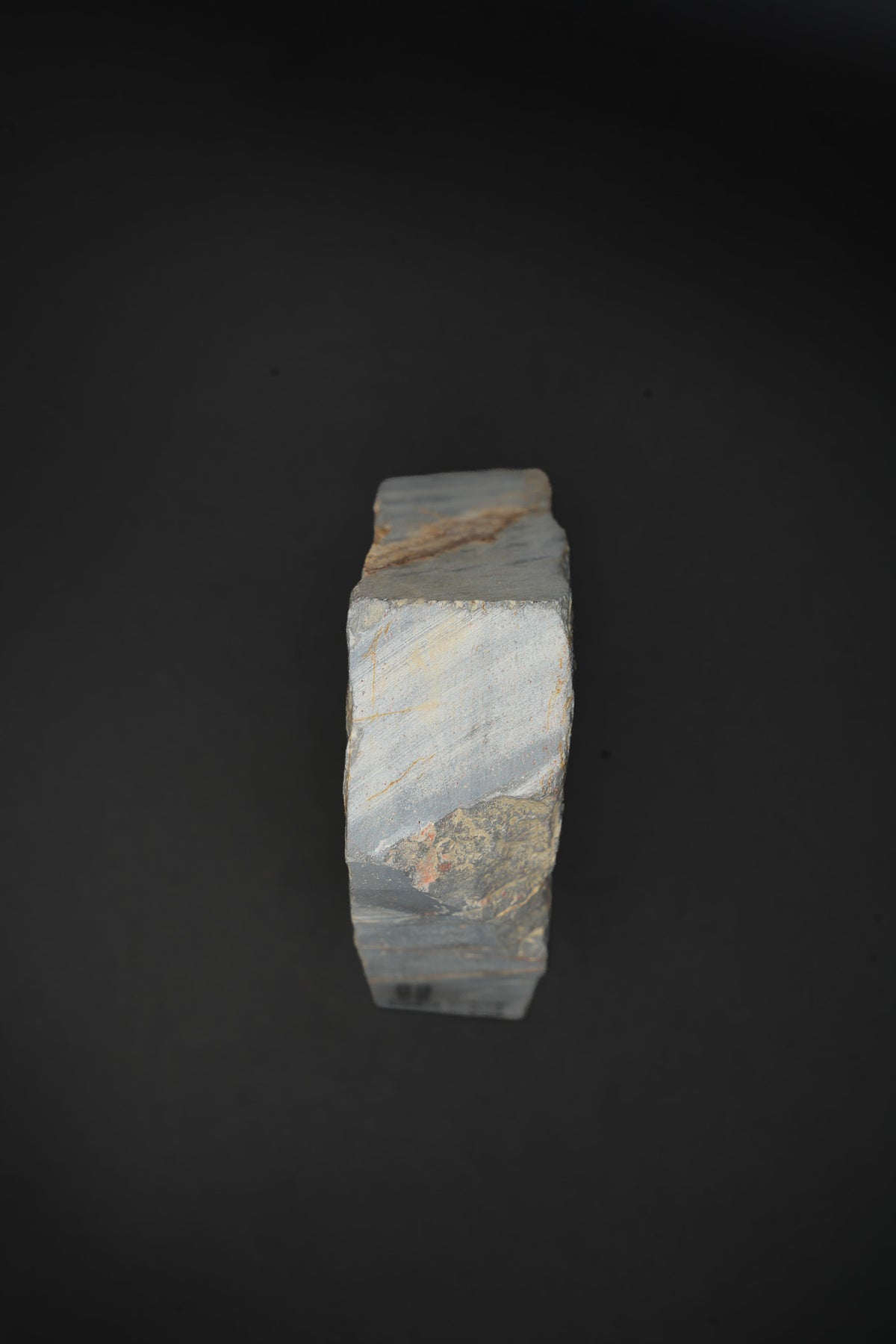
Uchigumori du quartier de Mizukihara à Kyoto, grain d’environ 8000, tendre sur notre échelle (2/5).
Ce bloc réunit les deux motifs sur une même face : un renge rose saumon sur la moitié supérieure, des marques namazu gris pâle en dessous, et un réseau de veines ocre traversant le corps gris-bleu. Un bord conserve encore la peau ferrugineuse avec laquelle la pierre est sortie du lit.
Traditionnellement associée au travail ha-duya et prisée pour la finition kasumi raffinée qu’elle permet d’obtenir. Fournie non aplatie, conformément aux pratiques traditionnelles de polissage des sabres — l’utilisateur façonne la pierre selon ses besoins. Pour l’affûtage courant des couteaux et des rasoirs, nous recommandons de l’aplanir après l’achat et de lui donner un léger chanfrein. L’aplanissement peut se faire avec une plaque diamantée.
Vous recevrez exactement la pierre présentée.
Description complète
Description complète
Traditionally Uchigumori is not intended to function as a conventional flat sharpening stone.
For Japanese swords, the stone is shaped with a slightly rounded (kamaboko-like) surface to match the curvature of the blade.
However, for kitchen knives or razors, a flat surface is perfectly suitable and recommended.
Supplied in its natural state, the stone leaves decisions about preparation and use to the practitioner.
Matériaux
Matériaux
Natural Whetstone - Uchigomori Renge / Namazu
Des mesures
Des mesures
Length: 20,0 cm
Width: 9,0 cm
Height: 2,8 cm
Weight: 970 g
Hardness: ● ● ○○○ (2/5) soft
Guide d'entretien
Guide d'entretien
Sharpening Care Guide — Natural Japanese Whetstones
To preserve the character, performance, and longevity of your natural Japanese whetstone, please follow these care guidelines:
1. Keep the Stone Flat
Natural stones wear more slowly than synthetic stones, but regular flattening is still essential for controlled sharpening. Use a diamond lapping plate or a suitable flattening stone to maintain a flat, even surface. Avoid aggressive lapping unless necessary.
2. Use Water Only
Natural Japanese whetstones are designed to be used with water. Lightly wet the surface before use. Some stones benefit from a brief pre-wetting, while others should not be soaked for extended periods. Do not use oil or chemical additives.
3. Slurry Management
Depending on the stone, slurry may develop naturally during use. This is part of the sharpening process and should be managed gently. Avoid excessive pressure or artificial slurry generation unless intentionally desired.
4. Clean After Use
After sharpening, rinse the stone thoroughly with clean water to remove metal particles and residue. Use a soft brush if needed. Do not use soap, detergents, or abrasive cleaners.
5. Dry Slowly and Naturally
Allow the stone to air dry completely in a shaded, well-ventilated area. Avoid direct sunlight, heaters, or rapid temperature changes, as natural stones can crack if dried too quickly.
6. Store with Care
Store the stone in a dry, stable environment. Avoid damp locations and protect the stone from impacts or sudden temperature changes. If stored long-term, ensure the stone is fully dry before placing it in a box or wrapping.
7. Inspect Before Use
Before each use, rinse the surface and ensure it is free from dust, grit, or foreign particles. Any contamination may cause scratches on the blade and compromise sharpening results.
By following these guidelines, your natural whetstone will retain its unique sharpening characteristics and provide consistent, controlled results over time.
Partager