Iwasaki 岩崎
- Période
- Since the late 1940s
- Lieu
- Sanjō, Niigata
- Atelier en activité
- État des sources
- Workshop and its generations documented
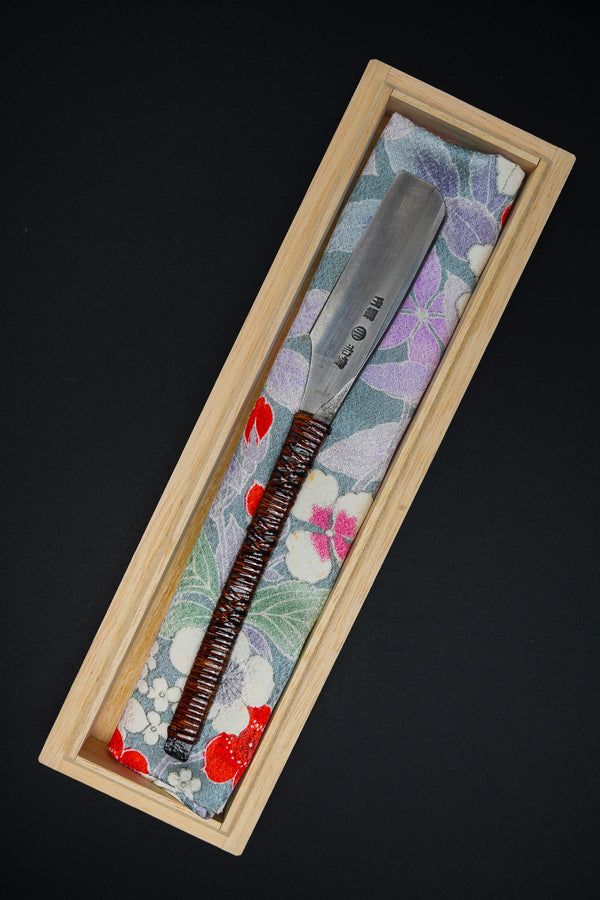
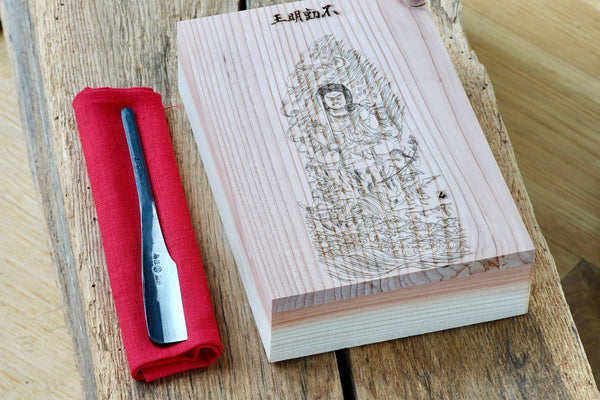
Iwasaki is the name behind the Sanjō Seisakusho 三条製作所 in Sanjō, Niigata, the workshop that still forges kamisori in the traditional way.
Iwasaki Kōsuke 岩崎航介 (1903–1967) founded it after the Second World War. He had studied both history and metallurgy at Tokyo Imperial University, trained with a swordsmith and a sword polisher, and brought the two fields together: he established tamahagane 玉鋼, the steel of the Japanese sword, as a steel for razors. For the Imperial Household Agency he led the metallurgical study of the swords of the Shōsōin, published in 1974 as 『正倉院の刀剣』. His own writings appeared after his death as 『刃物の見方』 (1969).
His son Iwasaki Shigeyoshi 岩崎重義 (born 1933) led the workshop in the second generation and completed his father's Shōsōin study. From the 1950s the workshop also made Western-style razors in tamahagane. Among those trained here was Iizuka Tokifusa, who later founded his own forge under the name Shigefusa 重房.
Mizuochi Ryōichi 水落良市 joined in 1961 and leads the workshop today. He was named a traditional craftsman in 2014 and received the Mitsui Golden Takumi Award in 2020. His apprentice Inagaki Yoshihiro 稲垣良博, from Kanagawa, is learning every stage of the work under him.
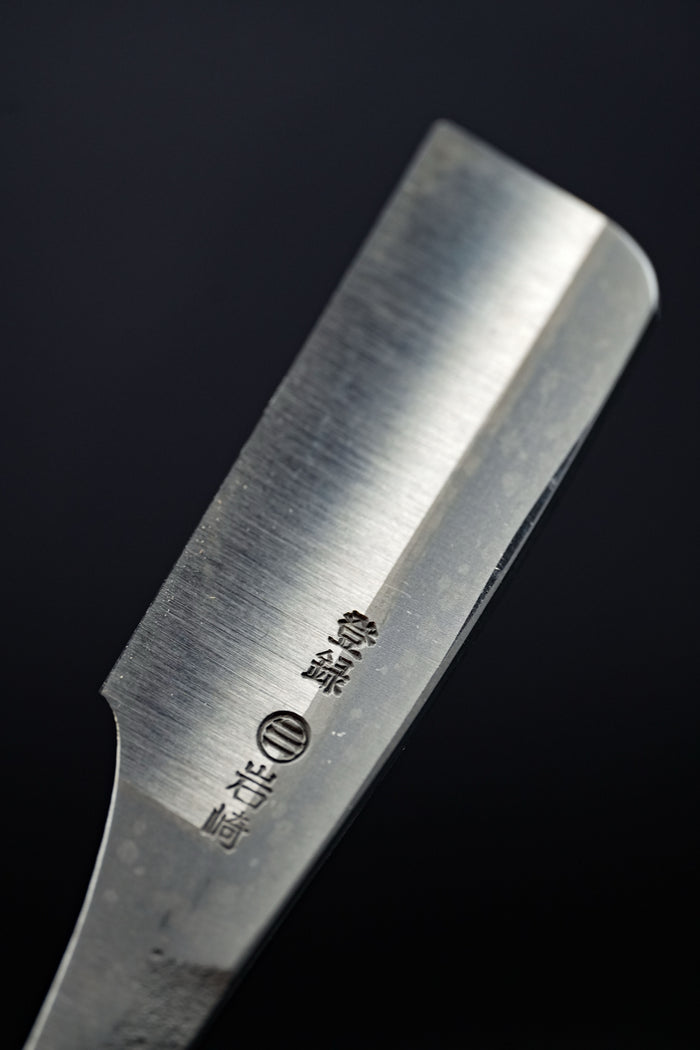
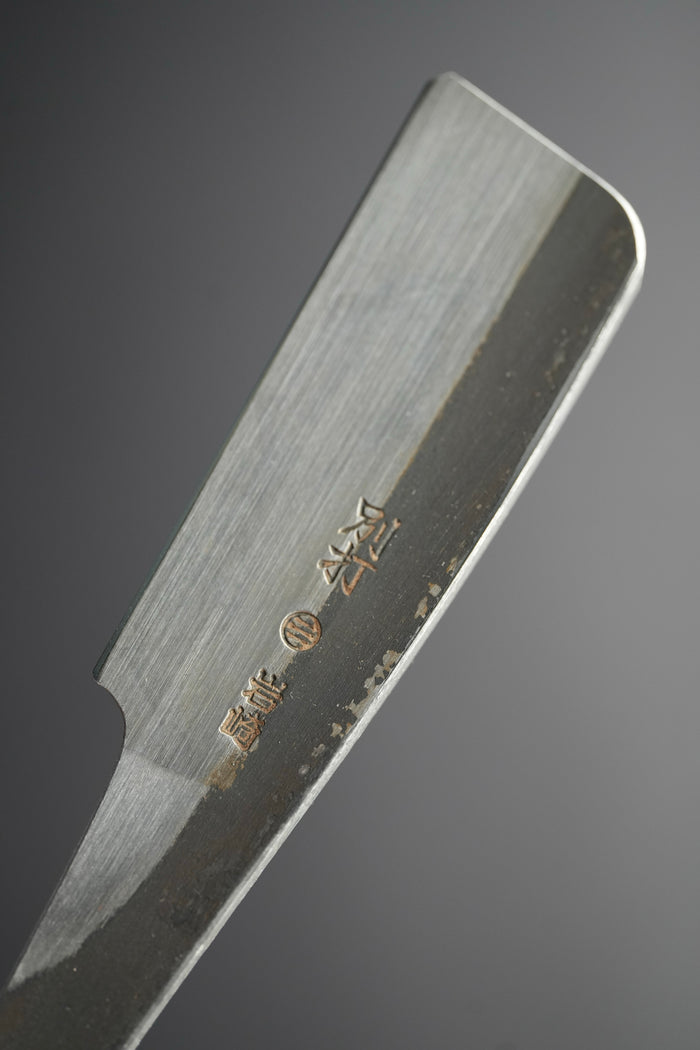
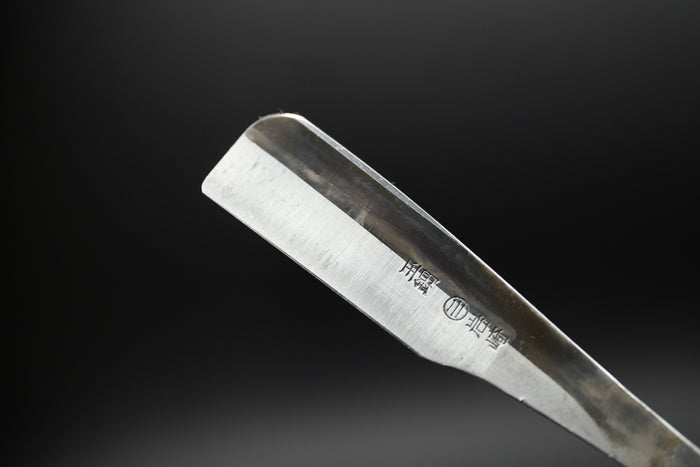
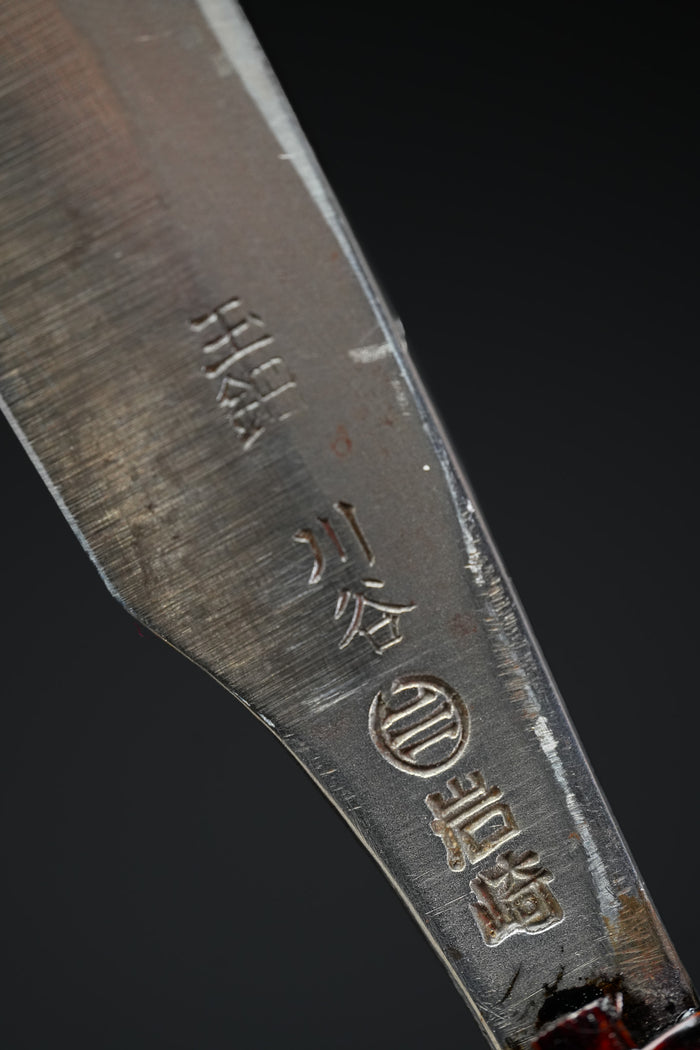
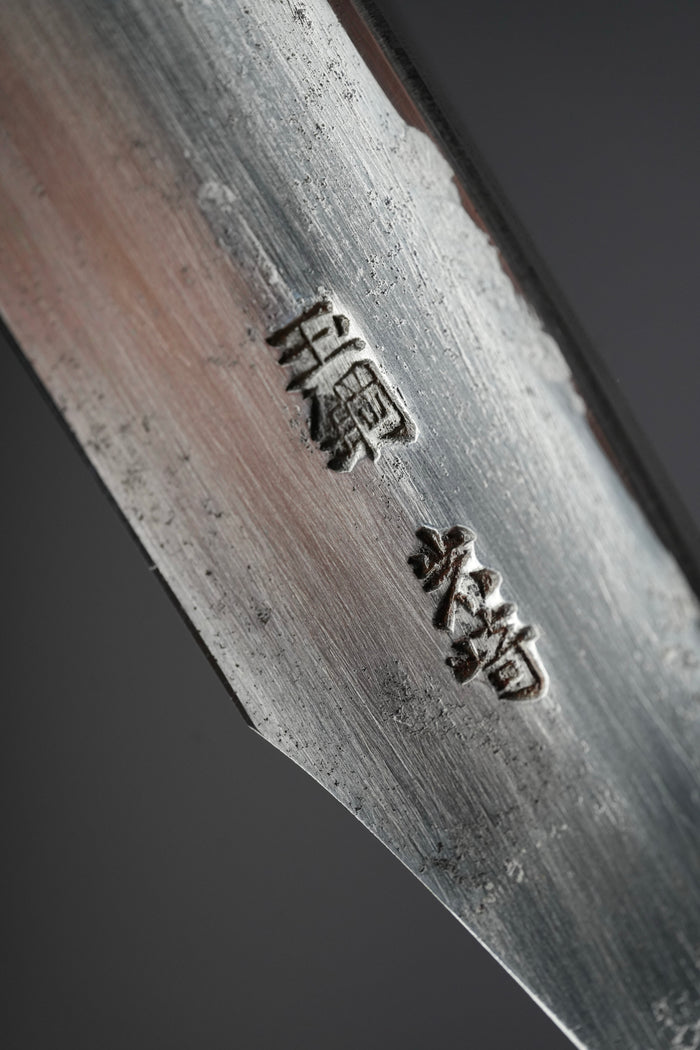
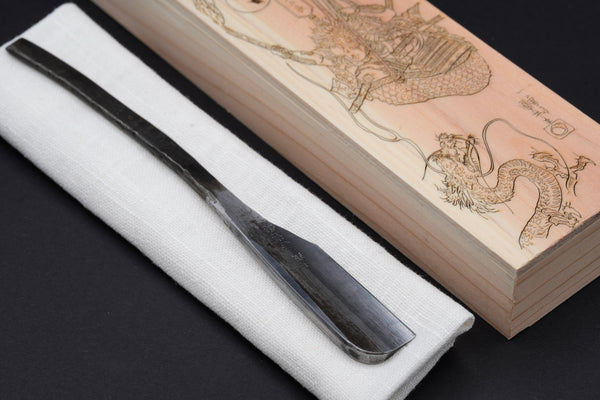
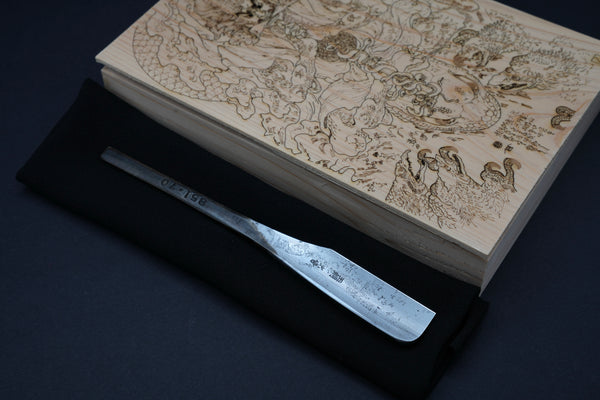
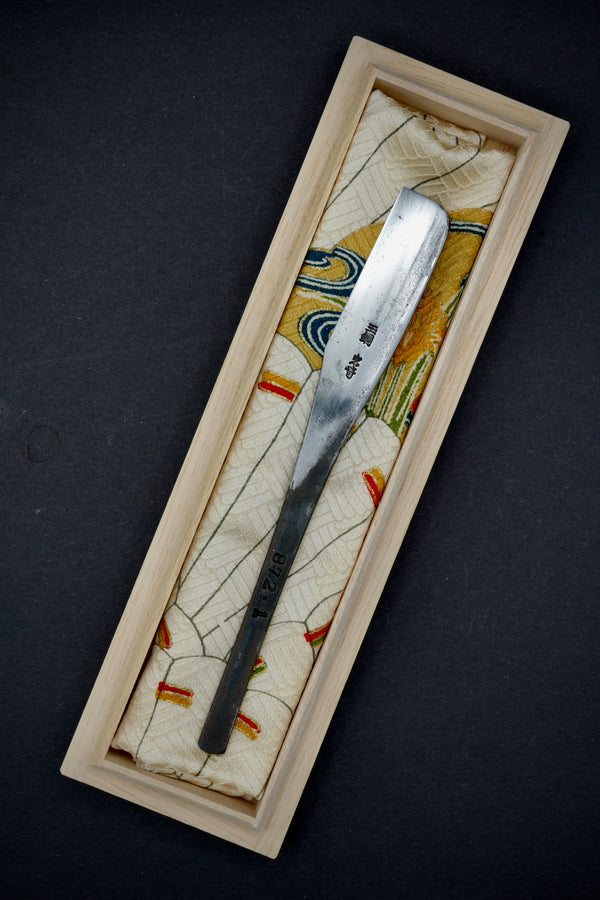
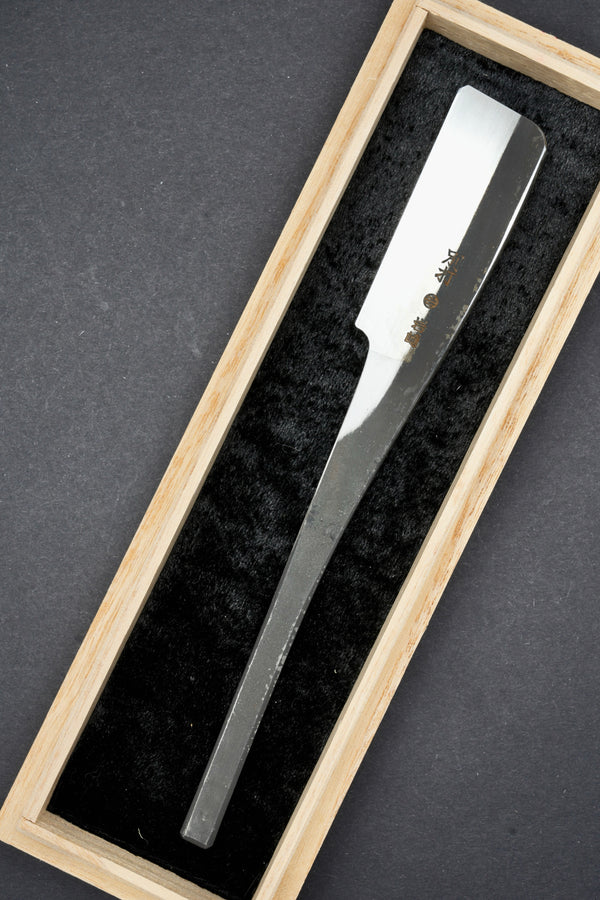
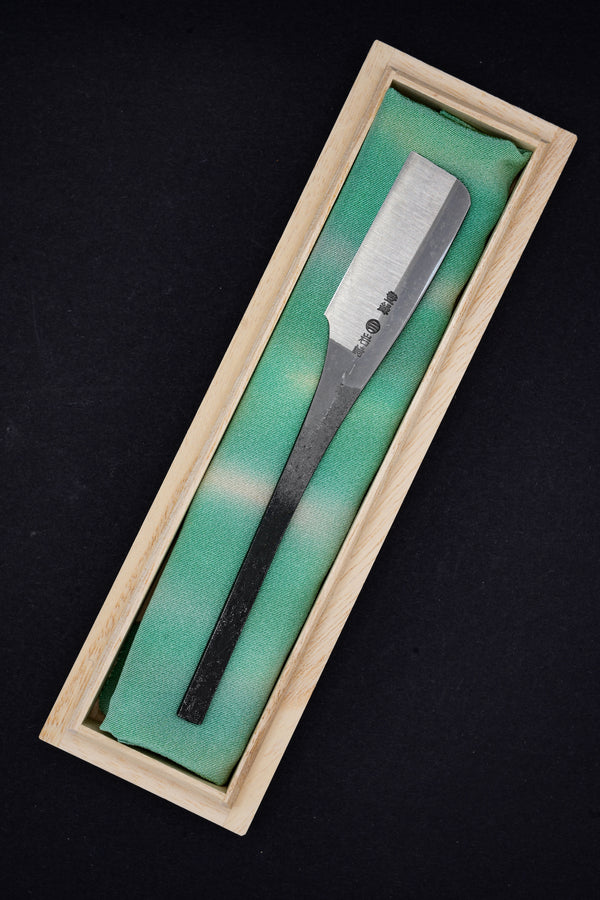
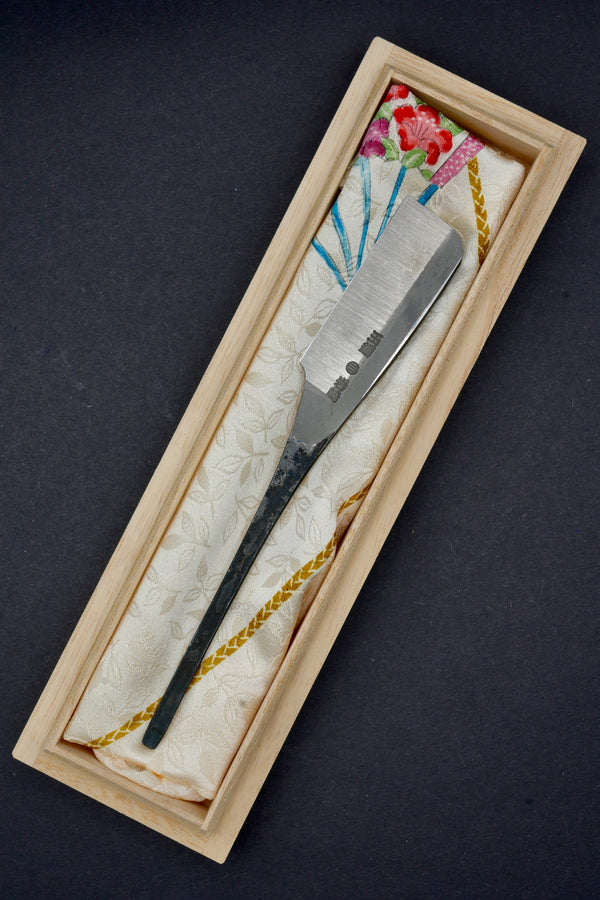
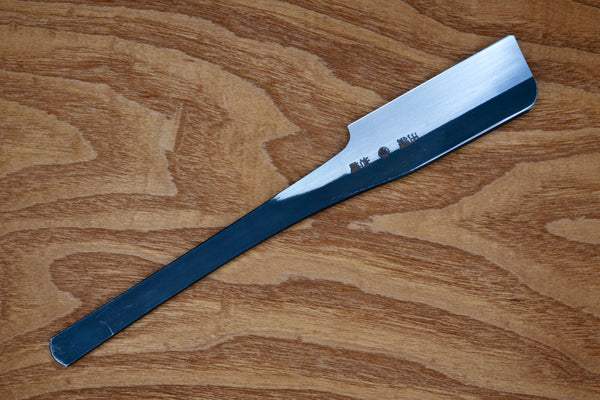
Marks and words found on Iwasaki blades:
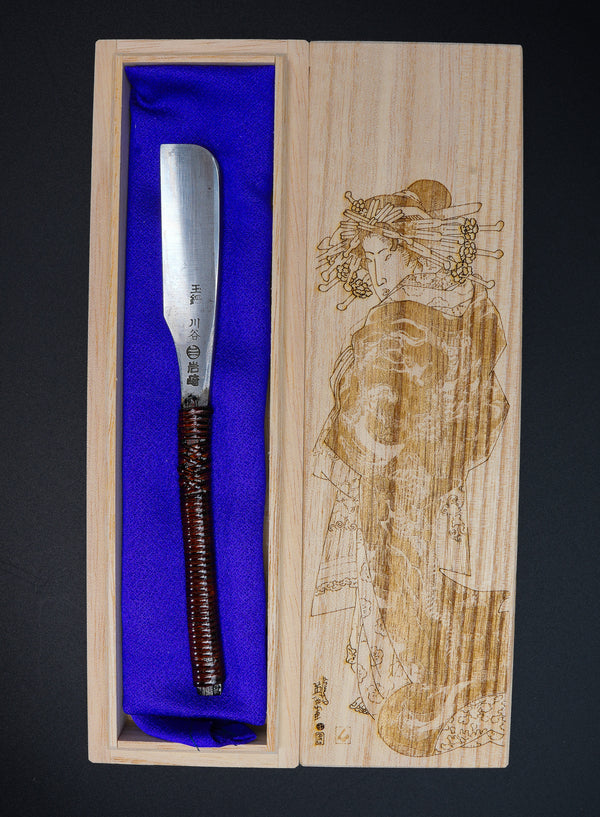
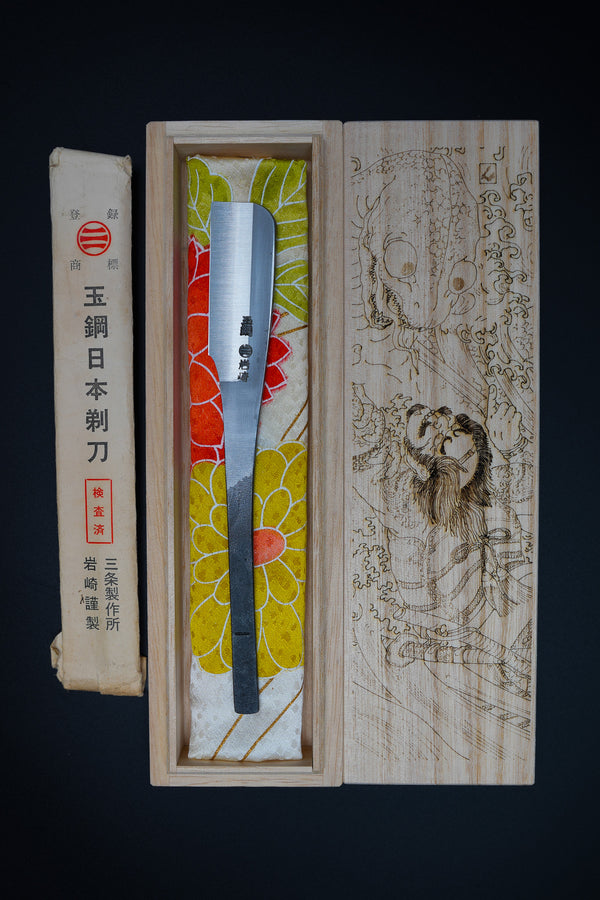
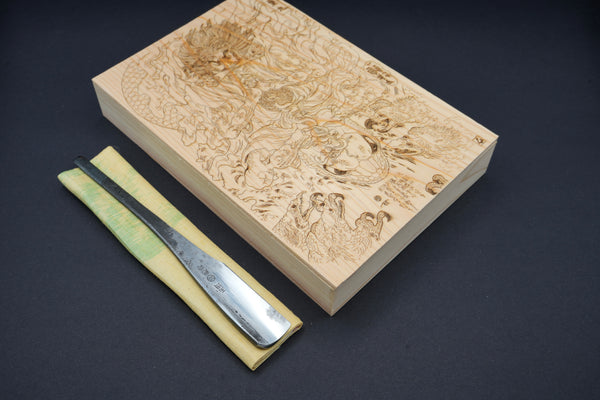
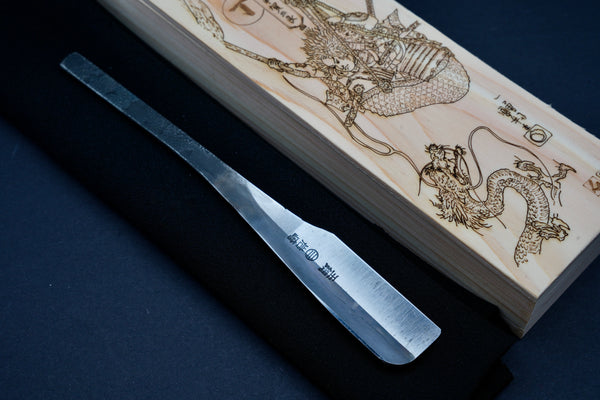
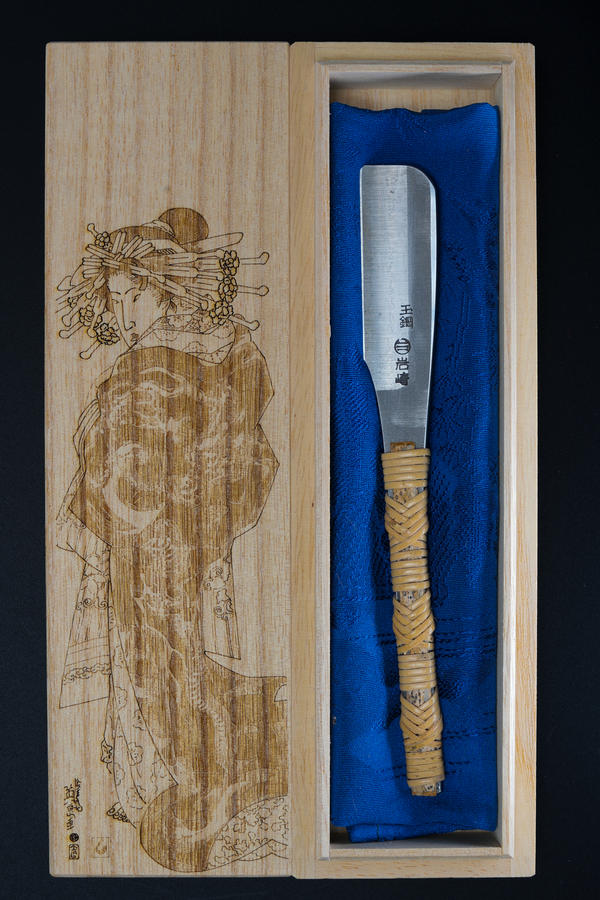
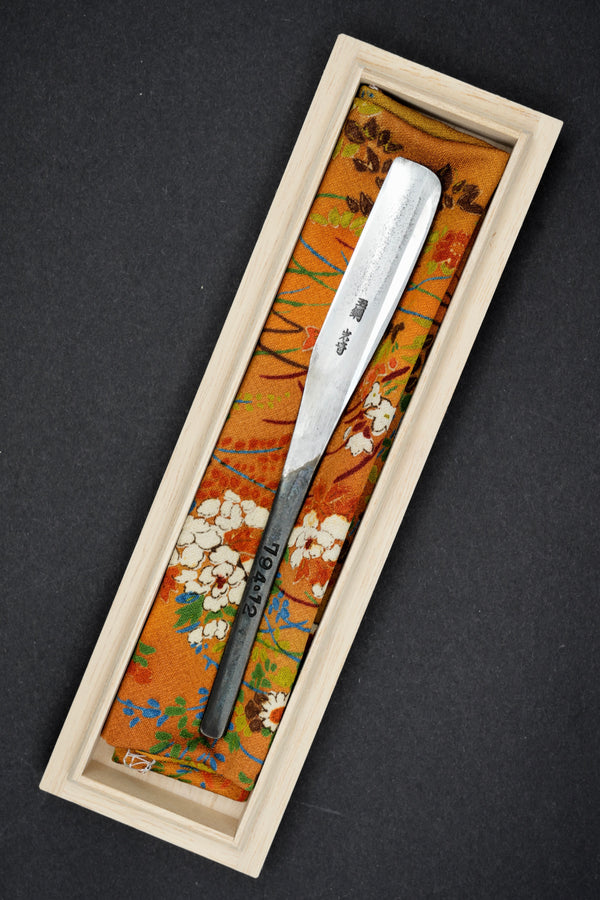
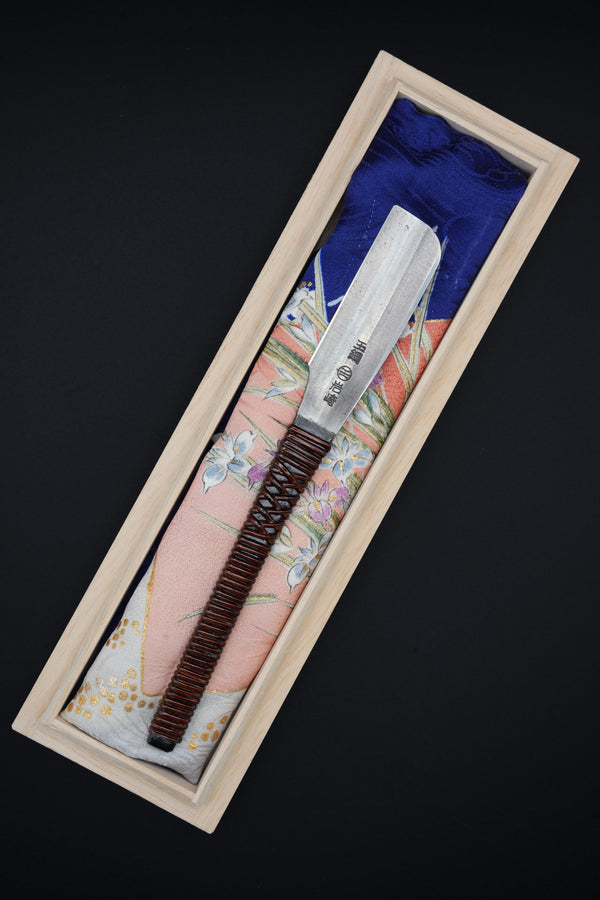
玉鋼 ・ tamahagane ・ traditional sword steel
炭素鋼 ・ tansokō ・ carbon steel
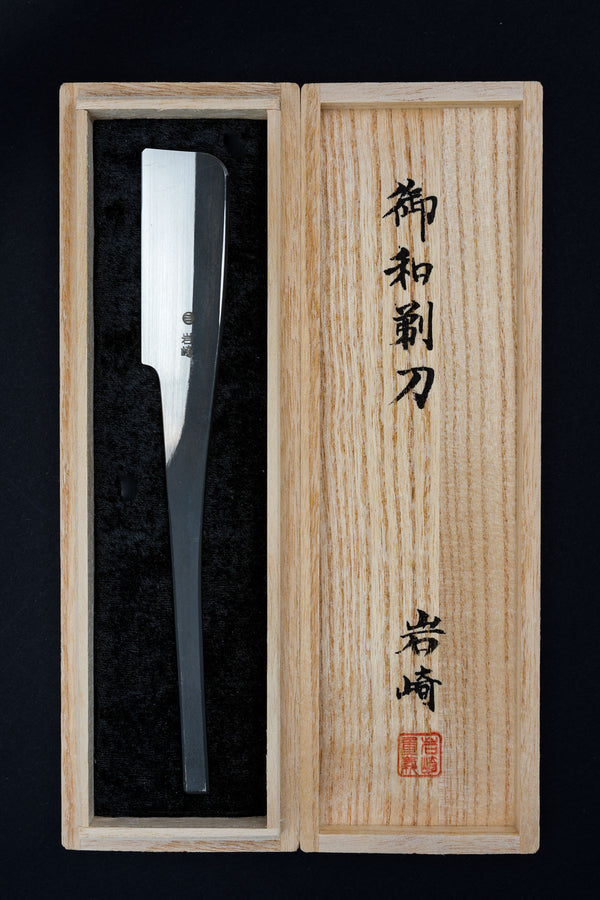
岩崎 ・ Iwasaki ・ the family name
㊂ ・ maru-san ・ three in a circle, the registered mark of the Sanjō Seisakusho
重義 ・ Shigeyoshi ・ first name of the second generation, found on very few blades
登録 ・ tōroku ・ registered
別打 ・ betsuuchi ・ specially forged, a mark ordered by a wholesaler
Earlier blades read 玉鋼 岩崎. Later ones add the ㊂ mark between steel and name, and the blades are signed 岩崎 to this day. Only a very few carry 重義 in place of 岩崎.
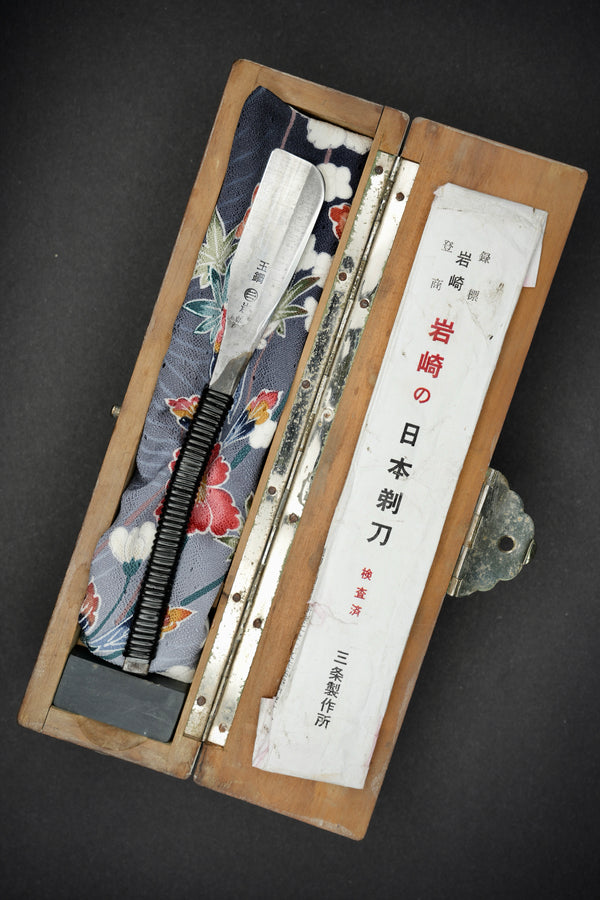
From the boxes and paper wrappers:
玉鋼日本剃刀 ・ tamahagane nihon kamisori ・ Japanese razor of tamahagane
三条製作所 岩崎謹製 ・ Sanjō Seisakusho, Iwasaki kinsei ・ respectfully made by Iwasaki
検査済 ・ kensa-zumi ・ inspected
The workshop makes three sizes: 半丁掛 hanchōgake, 一丁掛 icchōgake and 二丁掛 nichōgake. The size is not engraved on the blade.
Iwasaki Kōsuke 岩崎航介 (1903–1967) founded it after the Second World War. He had studied both history and metallurgy at Tokyo Imperial University, trained with a swordsmith and a sword polisher, and brought the two fields together: he established tamahagane 玉鋼, the steel of the Japanese sword, as a steel for razors. For the Imperial Household Agency he led the metallurgical study of the swords of the Shōsōin, published in 1974 as 『正倉院の刀剣』. His own writings appeared after his death as 『刃物の見方』 (1969).
His son Iwasaki Shigeyoshi 岩崎重義 (born 1933) led the workshop in the second generation and completed his father's Shōsōin study. From the 1950s the workshop also made Western-style razors in tamahagane. Among those trained here was Iizuka Tokifusa, who later founded his own forge under the name Shigefusa 重房.
Mizuochi Ryōichi 水落良市 joined in 1961 and leads the workshop today. He was named a traditional craftsman in 2014 and received the Mitsui Golden Takumi Award in 2020. His apprentice Inagaki Yoshihiro 稲垣良博, from Kanagawa, is learning every stage of the work under him.
Marks and words found on Iwasaki blades:
玉鋼 ・ tamahagane ・ traditional sword steel
炭素鋼 ・ tansokō ・ carbon steel
岩崎 ・ Iwasaki ・ the family name
㊂ ・ maru-san ・ three in a circle, the registered mark of the Sanjō Seisakusho
重義 ・ Shigeyoshi ・ first name of the second generation, found on very few blades
登録 ・ tōroku ・ registered
別打 ・ betsuuchi ・ specially forged, a mark ordered by a wholesaler
Earlier blades read 玉鋼 岩崎. Later ones add the ㊂ mark between steel and name, and the blades are signed 岩崎 to this day. Only a very few carry 重義 in place of 岩崎.
From the boxes and paper wrappers:
玉鋼日本剃刀 ・ tamahagane nihon kamisori ・ Japanese razor of tamahagane
三条製作所 岩崎謹製 ・ Sanjō Seisakusho, Iwasaki kinsei ・ respectfully made by Iwasaki
検査済 ・ kensa-zumi ・ inspected
The workshop makes three sizes: 半丁掛 hanchōgake, 一丁掛 icchōgake and 二丁掛 nichōgake. The size is not engraved on the blade.

Marques connues
Lecture
Lecture
Lecture
Lecture
Lecture
Sources
Pièces documentées
Disponible
Documenté – vendu
Textes et photographies © Kamisori Harnisch. Citation avec mention de la source.