

kamisoriharnisch
Uchigumori Renge Namazu・Natürlicher Polierstein・Awasedo・Kyoto, Japan #102
Uchigumori Renge Namazu・Natürlicher Polierstein・Awasedo・Kyoto, Japan #102
Niedriger Lagerbestand
Verfügbarkeit für Abholungen konnte nicht geladen werden
Uchigumori aus dem Mizukihara-Gebiet in Kyoto, ca. 8000er Körnung, auf unserer Skala weich (2/5).
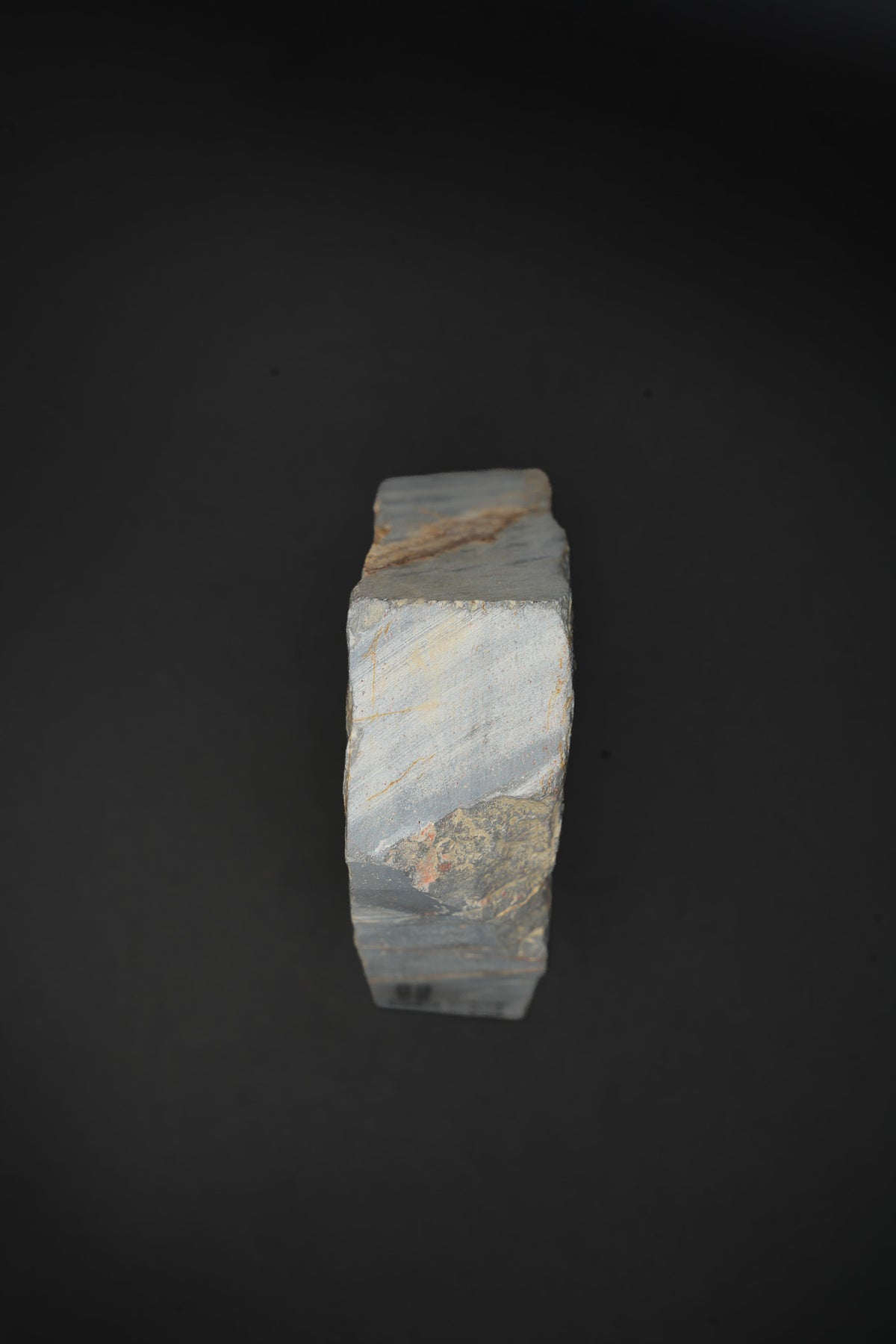
Dieser Rohstein trägt beide Muster in einer Fläche: lachsrosa Renge über der oberen Hälfte, darunter blassgraue Namazu-Zeichnungen, und ein Netz ockerfarbener Adern, das durch den blaugrauen Korpus läuft. Eine Kante zeigt noch die eisenfleckige Haut, mit der der Stein aus dem Lager kam.
Traditionell der Ha-Duya-Arbeit zugeordnet und geschätzt für ein feines Kasumi-Finish. Wird unbegradigt geliefert, gemäß der traditionellen Schwertpolierpraxis — der Nutzer formt den Stein genau nach seinen Bedürfnissen. Für das normale Schärfen von Messern und Rasiermessern empfehlen wir, ihn nach dem Kauf zu begradigen und leicht anzufasen. Das Begradigen kann mit einer Diamant-Abziehplatte erfolgen.
Sie erhalten genau den abgebildeten Stein.
Gesamte Beschreibung
Gesamte Beschreibung
Traditionally Uchigumori is not intended to function as a conventional flat sharpening stone.
For Japanese swords, the stone is shaped with a slightly rounded (kamaboko-like) surface to match the curvature of the blade.
However, for kitchen knives or razors, a flat surface is perfectly suitable and recommended.
Supplied in its natural state, the stone leaves decisions about preparation and use to the practitioner.
Materialien
Materialien
Natural Whetstone - Uchigomori Renge / Namazu
Abmessungen
Abmessungen
Length: 20,0 cm
Width: 9,0 cm
Height: 2,8 cm
Weight: 970 g
Hardness: ● ● ○○○ (2/5) soft
Pflegeratgeber
Pflegeratgeber
Sharpening Care Guide — Natural Japanese Whetstones
To preserve the character, performance, and longevity of your natural Japanese whetstone, please follow these care guidelines:
1. Keep the Stone Flat
Natural stones wear more slowly than synthetic stones, but regular flattening is still essential for controlled sharpening. Use a diamond lapping plate or a suitable flattening stone to maintain a flat, even surface. Avoid aggressive lapping unless necessary.
2. Use Water Only
Natural Japanese whetstones are designed to be used with water. Lightly wet the surface before use. Some stones benefit from a brief pre-wetting, while others should not be soaked for extended periods. Do not use oil or chemical additives.
3. Slurry Management
Depending on the stone, slurry may develop naturally during use. This is part of the sharpening process and should be managed gently. Avoid excessive pressure or artificial slurry generation unless intentionally desired.
4. Clean After Use
After sharpening, rinse the stone thoroughly with clean water to remove metal particles and residue. Use a soft brush if needed. Do not use soap, detergents, or abrasive cleaners.
5. Dry Slowly and Naturally
Allow the stone to air dry completely in a shaded, well-ventilated area. Avoid direct sunlight, heaters, or rapid temperature changes, as natural stones can crack if dried too quickly.
6. Store with Care
Store the stone in a dry, stable environment. Avoid damp locations and protect the stone from impacts or sudden temperature changes. If stored long-term, ensure the stone is fully dry before placing it in a box or wrapping.
7. Inspect Before Use
Before each use, rinse the surface and ensure it is free from dust, grit, or foreign particles. Any contamination may cause scratches on the blade and compromise sharpening results.
By following these guidelines, your natural whetstone will retain its unique sharpening characteristics and provide consistent, controlled results over time.
Teilen